Teasels Landscapes

Within the UK domestic gardens cover 959 800 hectares, an area more than three times larger than that of our national nature reserves. This area means gardens are vital to help reverse the biodiversity crisis. Gardens provide food, shelter and nesting sites for birds, mammals, insects, amphibians, and reptiles and despite their small size (compared to the open countryside) it is common for a single garden to contain multiple habitats within its boundaries. It is easy to imagine a single garden which has a pond (wetland habitat) area of long grass (meadow habitat), a hedge line (scrub habitat) and trees (a woodland habitat) all within a relatively small space.
Over the last few years our business has shifted its focus to creating gardens with as much biodiversity habitat within them as possible. There are proven features and styles of planting which have been linked to biodiversity provision and we have used these wherever possible and measured these as key statistics to see how we are doing.
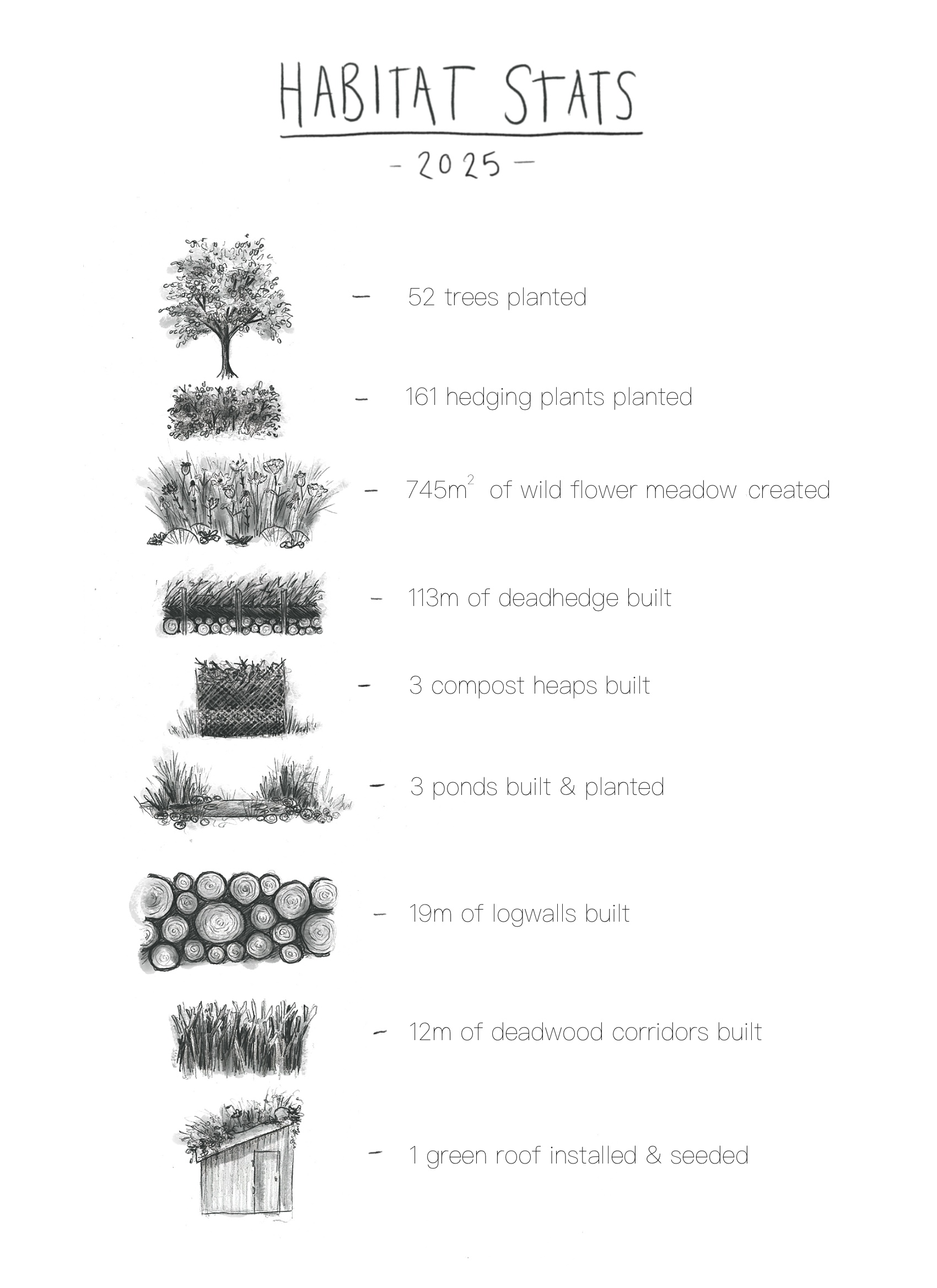
Trees planted: Trees can support many animal species who use them for food, shelter and nesting sites.
Hedges planted: Wildlife is often looking for complex vegetation to live and feed among, hedges are a key place for nesting, shelter and feeding.
Wildflower meadows: Add to the variety of plant species present within the garden with a wide range of native flowers and grasses growing within them. They are used by pollinators and as a food plant for the larval stages of some butterfly species. Longer areas of vegetation also make great habitat for small mammals
Dead hedges: Made up of dead woody material (twigs) laid horizontally dead hedges are a great way to reuse waste within the garden and create habitat for small mammals as well as saproxylic insects (those which rely on deadwood as part of their lifecycle)
Compost heaps: A great way of reducing waste and gardening regeneratively, compost heaps also become a habitat for many insects, soil organisms and reptiles
Ponds: One of the most beneficial features in a garden pond planted with native plants are used by many species of animals.
Log walls: Using waste creatively to benefit saproxylic insects, log walls can also become a structural element within a garden
Deadwood corridors: Another way of incorporating deadwood into gardens, standing deadwood is a vital habitat missing from the wider landscape, including this within gardens can be hugely beneficial to biodiversity
Green roofs: Offsets the space taken by a building allowing native grasses and wildflowers to be grown on top of them each in turn becoming a habitat of their own.
Are you looking to build biodiversity provision within your garden?
